
Training our Care Team
We provide comprehensive training to our support workers, healthcare assistants, and registered nurses. Our in-house sessions, led by experienced Clinical Educators, equip all employees to deliver high-quality, person-centred care with confidence.
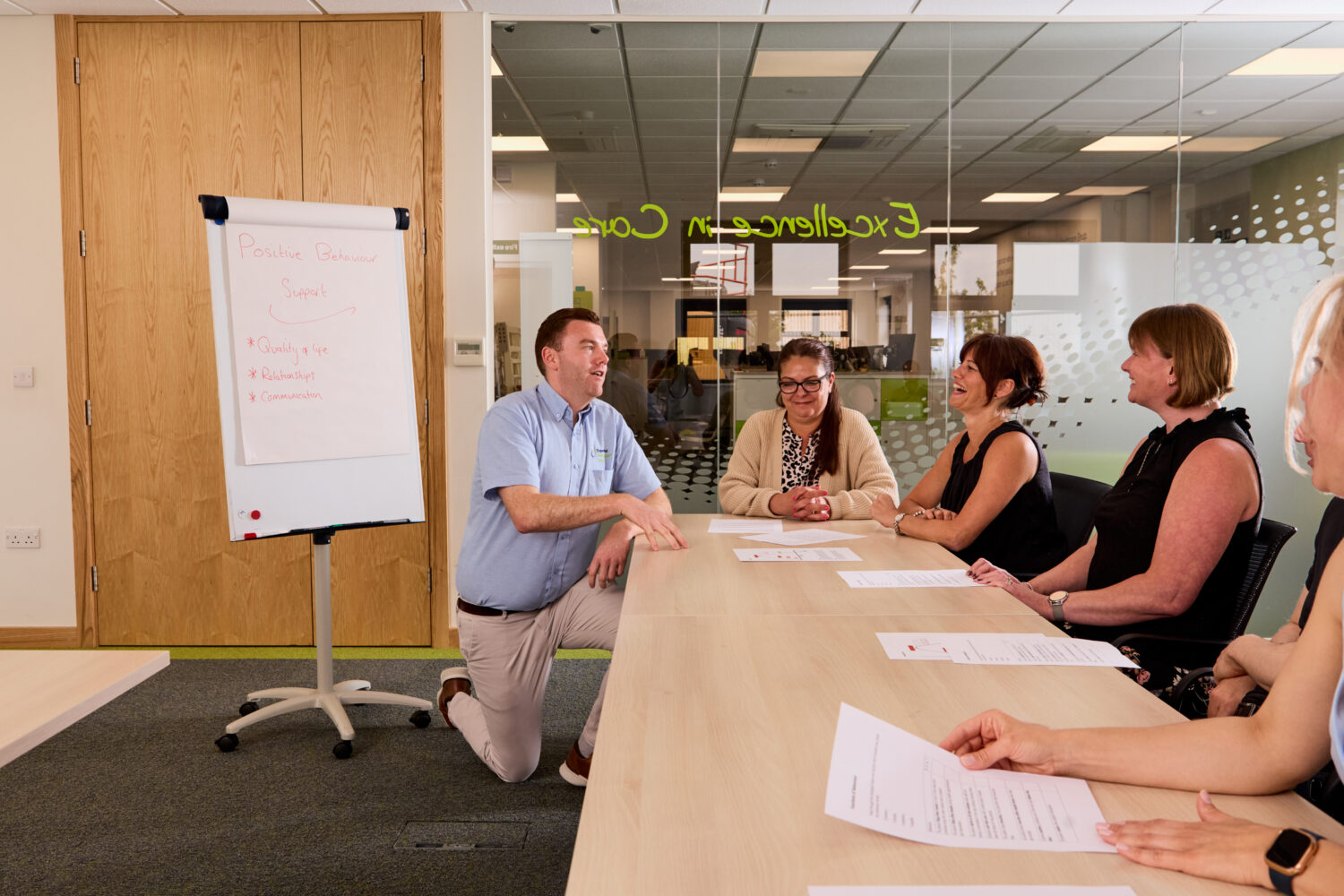
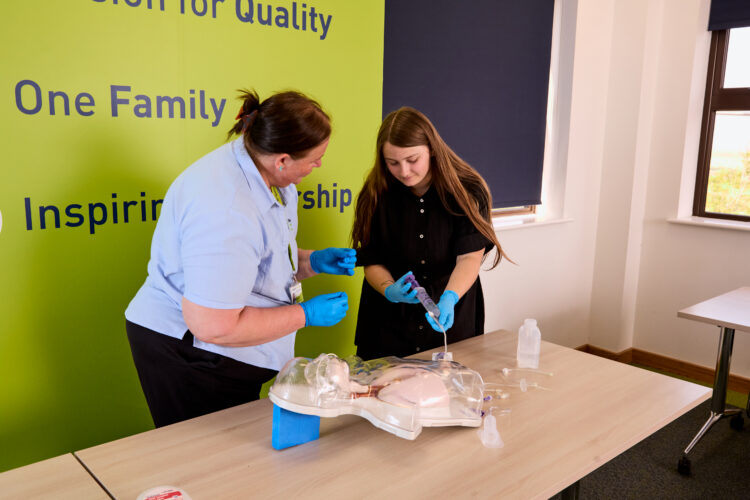
Industry-leading training
Joining our team comes with the exceptional benefit of industry-leading training. Renowned across the Southeast, our training programs are extended to private hospitals, hospices, and care settings.
We take pride in providing ongoing paid training opportunities to all our care team members, including specialist client-specific clinical training, Diploma certifications, and pathways to management qualifications for career progression.
Everyone in our complex care team is paid for training.
Our Training Process
We offer 5 days of comprehensive training, beginning with 1 day of online training that can be completed at home. Following this, our complex care team participates in 4 days of paid, in-person training.
Our agency team working with hospitals, hospices, and care settings across Kent and Sussex, undergo two training days. This includes our comprehensive Care Certificate course, practical assessments, and medication competency. Team members may also receive specialised training.
Care Certificate
By law, everyone starting a new job in the health and social care sector must complete an induction programme that meets Care Certificate standards.
Our induction begins with online training to ensure you comply with UK Health and Social Care standards.
This online training is a chance to refresh and recap your knowledge.
Practical Skills Assessment
Our in-person practical skills assessment is an incredible opportunity to reinforce your Care Certificate training and master essential techniques.
This hands-on experience will not only refresh your knowledge but also ensure you are up-to-date with the latest best practices.
Our expert trainers will provide exceptional training in:
- Moving and Positioning
- Basic Life Support and First Aid
- Safeguarding – Key Concepts
- Code of Conduct – Scenarios and Discussions
Medication Competency
Medication Competency provides essential information on medication management, including how medications should be treated, prescribed, dispensed, and administered.
It equips both complex care team members and agency seniors with the knowledge needed to safely handle medications.
The course also covers key topics like relevant laws and terminology to ensure team members have a comprehensive understanding of medication practices.
Learning outcomes:
- Understand the legislation, policy and procedures relevant to the administration and safe handling of medicines
- Prescriptions & labels
- Classification of medication
- Refusal of medicines
- Drug storage and disposal
- Drug errors
- Common side effects and adverse reactions
- Paperwork including M.A.R. sheet
- Administration of medication
- Demonstration and practice of different administering techniques
Complex Care Day 1: Tracheostomy Theory & Simulated Practice
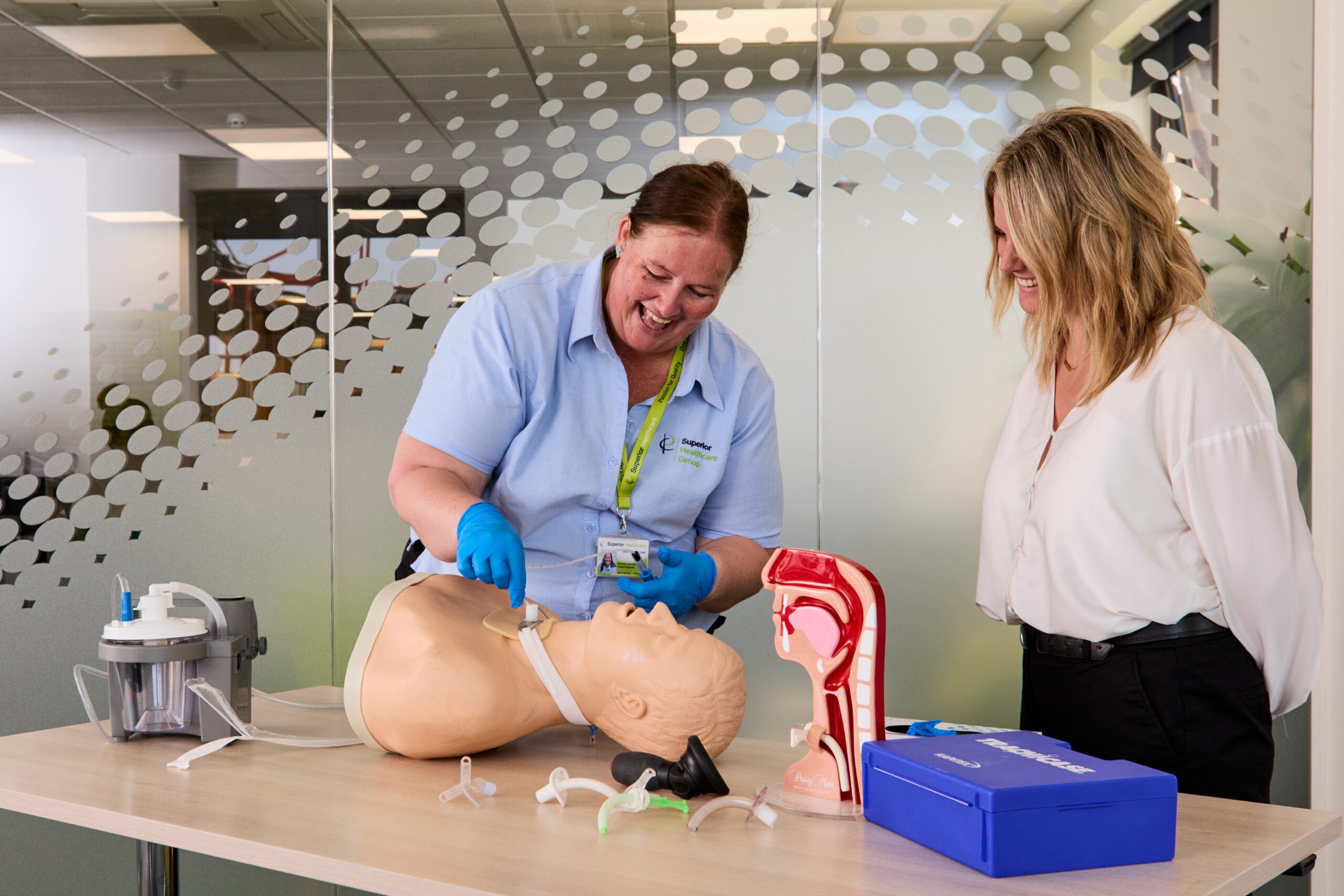
On Complex Care Day 1, you will gain comprehensive knowledge and hands-on experience in Tracheostomy Theory and Simulated Practice.
This training covers both adult and paediatric tracheostomy care in the community. It is designed to enhance your skills and replicate real-life situations you are likely to encounter.
You will learn about the anatomy and physiology of the respiratory system and the different characteristics and types of tracheostomy tubes, such as Shiley, Bivona Flex-Tend, fenestrated and uncuffed tubes, and more.
The training also covers essential techniques, for example, the two-person technique for tube changes, suction techniques, humidification practices, and emergency tracheostomy management.
Expect to gain confidence in tracheostomy care and seize this fantastic opportunity to advance your career by deepening your clinical knowledge and skills.
Complex Care Day 2: Epilepsy, Ventilation, and Enteral Feeding
On Complex Care Day 2, you will delve into Epilepsy Management, Ventilation, and Enteral Feeding. This clinical session will improve and re-fresh your clinical skills, build confidence, and prepare you to provide exceptional care.
Epilepsy Management and Buccal Administration
Learn about the various types of epilepsy and seizures, the causes and triggers of seizures, and what to do in the event of one.
You will learn how to effectively administer rescue medication, such as Buccal Midazolam, Rectal Diazepam, and Rectal Paraldehyde.
During the session, you will practice scenarios to gain confidence in using these medications during a seizure.
Ventilation
Gain confidence in supporting clients who require invasive and non-invasive ventilation. Familiarize yourself with common ventilators like Nippy Ventilators.
Understand ventilation modes such as CPAP and BiPAP, and learn about readings and settings theory. You’ll also set up ventilator circuits (wet and dry) with support from your clinical educator and cover Aerogen nebulizer theory.
Troubleshooting ventilator alarms is also included to ensure you’re well-prepared to handle any situation like a pro.
Cough Assist
As part of our ventilation training, we include a 2-hour session on cough assist awareness, essential for clients who need help clearing airway secretions.
Learn how the cough reflex works and why it’s crucial for keeping airways clear. An effective cough helps prevent serious complications like aspiration pneumonia.
Discover how cough assist devices (insufflation-exsufflation devices) transform care for individuals with neuromuscular conditions or difficulty coughing.
Finally, explores potential risks of improper use, how to monitor for adverse reactions, and how to respond effectively and confidently.
Enteral Feeding
This session provides a comprehensive overview of enteral feeding, with a focus on PEG (Percutaneous Endoscopic Gastrostomy) feeding.
Learn about the various uses and types of gastrostomy/jejunostomy devices, care of PEG and stoma, and skin-level balloon button devices (mini-button and mic-key button).
You’ll cover the complications of gastrostomy and different feeding methods (bolus, continuous, pump, gravity feeding).
Our Nutricia Flocare pump session includes setting up the feed, fill set, rate, volume limit, starting/stopping the feed, attaching feed to the mini-button, and venting tubes.
Complex Care Day 3: Spinal and Acquired Brain Injury, including Positive Behaviour Support Techniques
From first-hand experience, we know the critical importance of care teams having an exceptional understanding of each client’s individual needs, particularly important when supporting people living with brain and spinal injuries.
That is why we go the extra mile to support you. This session will teach you the causes and consequences of spinal injury and how to prevent Autonomic Dysreflexia.
It will cover suppository insertion, digital rectal stimulation, and bladder wash through practical exercises simulating scenarios you are likely to encounter when supporting someone with a spinal injury.
You will also learn the behavioural impact of spinal and brain injuries and how behaviours can be managed proactively, including the use of Positive Behaviour Support techniques.
Specialist Clinical Training
If you require additional clinical skills to confidently support your clients, we will provide you with paid training to ensure you continue to deliver high-quality care that meets their needs.
For example, you could receive training in syringe driver use, catheter care, or IV therapy.
Diplomas & Apprenticeships
Superior Healthcare is dedicated to offering continuous professional development to all its employees.
We know that excellent care relies on people like you who do an incredible job, which is why we proudly champion our care, nursing, and office teams with the passion and ambition to advance their careers.
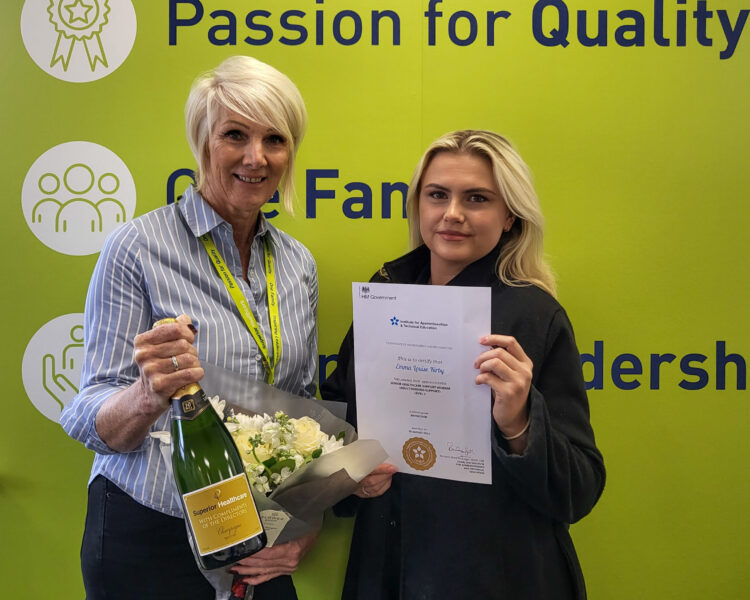
We provide a range of fully funded, City and Guilds-accredited Diplomas, ranging from level 2 to level 5. This is a fantastic opportunity to grow your skills and advance your career, open doors and take your career to the next level!
Continuous Development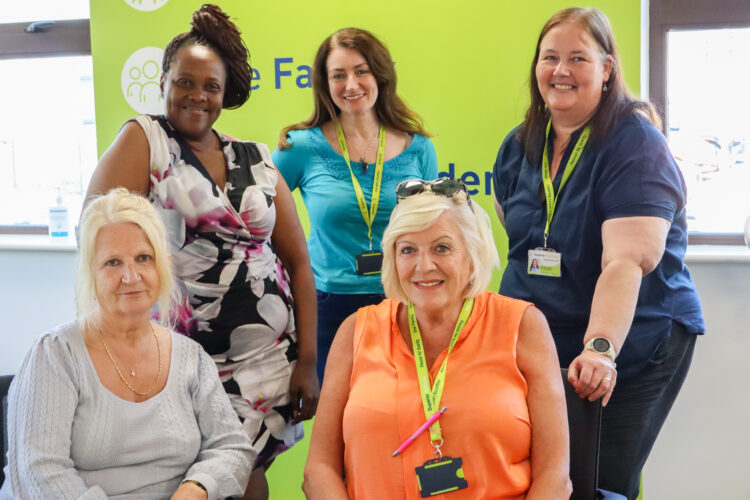
Employee progression
We support all our team members to progress within the company, which is why we offer so many training and diploma opportunities.
To help you reach your goals, our team of Nurse Managers, Care Coordinators, and Recruiters will help identify opportunities for you to advance. This means you can grow from a Healthcare Assistant to a Senior, then to a Field Care Supervisor, and eventually access senior roles.
For our nurses, you can join us as a Nurse, progress into a Nurse Manager role, and then advance to senior roles like Registered Manager.
Our RolesFor us, it's personal
Superior Healthcare was established in 2006 by Stewart Thorp, his father Charles, and Sarah Richards in response to their experience of caring for Stewart’s brother, Alex.
As a result, we know from experience how important it is to have a qualified, experienced and trained team providing care.
Apply now
If you haven’t already, apply to join our team!
We are currently recruiting support workers, care assistants, senior care assistants, registered nurses, and nurse managers across the UK.
Discover why carers and nurses love working with us!